Singapore Antimicrobial Resistance Research Symposium 2025
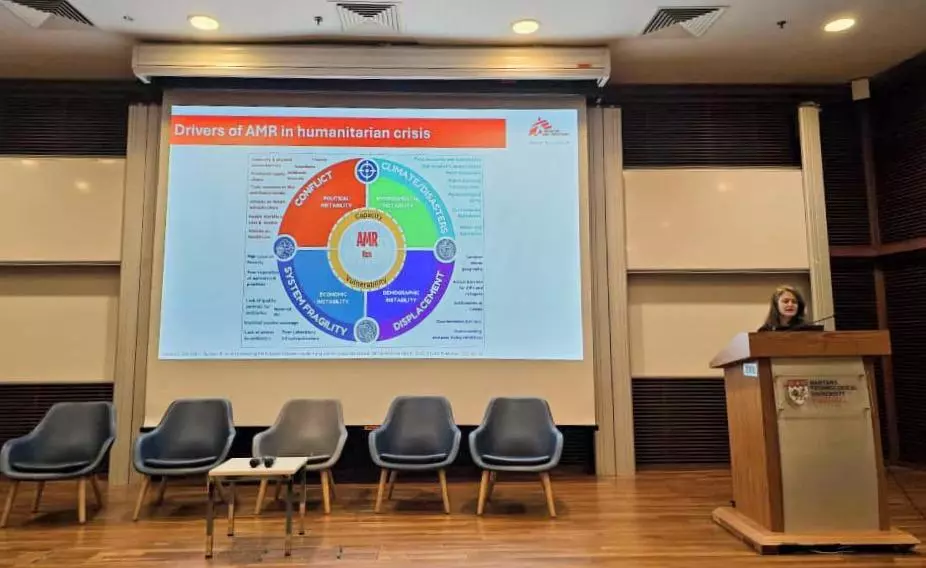
Letizia Ottino, AMR and Infectious Diseases Advisor at MSF’s Amman Medical Unit, during her keynote lecture on drivers of AMR in humanitarian crises at the Singapore Antimicrobial Resistance Research Symposium 2025.
Antimicrobial resistance (AMR) is one of the world’s most urgent health challenges, and tackling it requires cross-sector collaboration, knowledge sharing, and collective action.
On 12 November 2025, Doctors Without Borders / Médecins Sans Frontières (MSF) collaborated with the National University of Singapore and partner institutions for the annual Singapore AMR Research Symposium 2025, coinciding with World AMR Awareness Week. The event brought together global experts to advance understanding of AMR and foster global collaboration.
This year, Letizia Ottino, AMR and Infectious Diseases Advisor at MSF’s Amman Medical Unit, delivered a keynote lecture titled “AMR Control in Low- and Middle-Income Countries: Experiences from the Humanitarian Setting.” Her lecture highlighted the unique challenges of controlling AMR in humanitarian contexts, where fragile health systems and vulnerable populations amplify the risk of resistant infections.
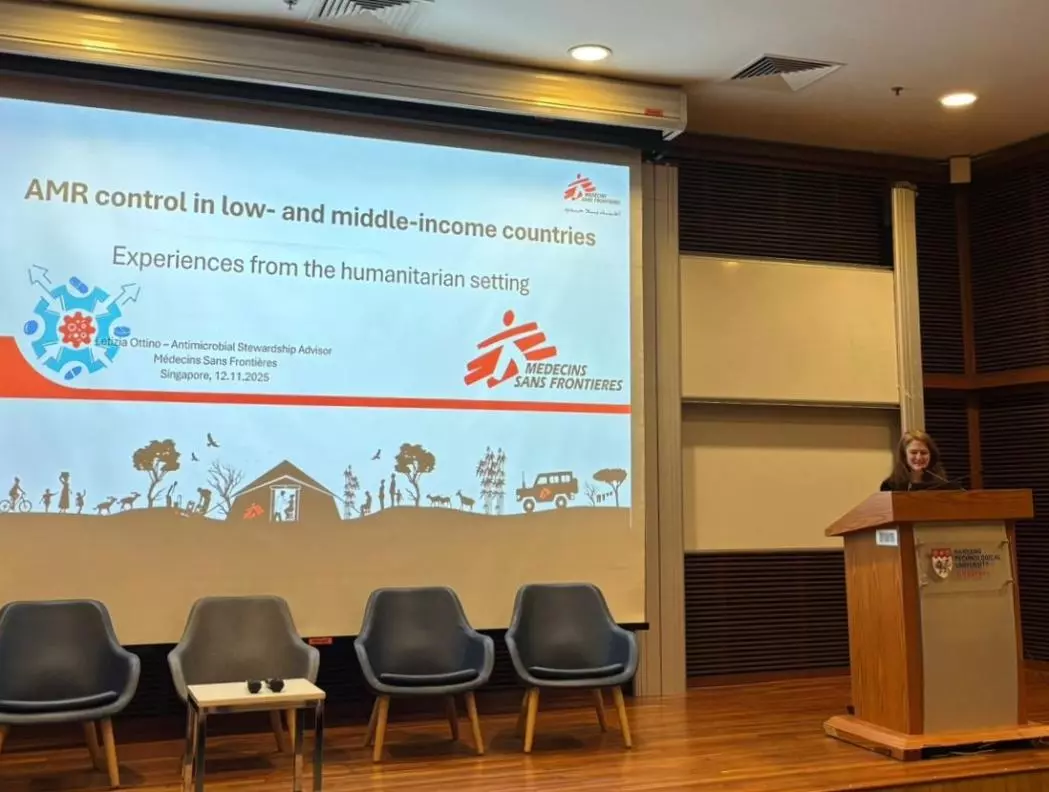
Letizia Ottino, AMR and Infectious Diseases Advisor at MSF’s Amman Medical Unit, presenting on “AMR control in low- and middle-income countries.”
A major focus of the lecture was the drivers of AMR in humanitarian crises. Drawing on the conceptual framework by Abbara et al. (2025) and MSF’s field experience, Ottino highlighted four key factors: conflict, climate and disasters, system fragility, and displacement. These factors interact with vulnerable populations and limited health capacity, worsening the spread of AMR. Field data and examples from MSF operations illustrated the real-world impact of these challenges, showing how they complicate treatment and threaten patient outcomes.
To address these challenges, MSF’s AMR strategy emphasises three pillars: Infection Prevention & Control, Antimicrobial Stewardship, and Microbiology. These pillars provide a structured, data-driven approach to prevent the emergence and spread of resistant infections in complex humanitarian settings. Under the Microbiology pillar, innovative solutions such as the Mini-Lab have been implemented to bridge laboratory gaps, providing high-quality equipment and tools that is readily adapted for low-resource settings.
Education is also essential: training clinicians, field teams, and health workers on AMR helps build awareness and strengthen response capacity. This commitment is reflected in the MSF Academy AMR learning initiative. Learn more here or watch a video overview.
Finally, Ottino highlighted the vital role of operational research in MSF’s work. Operational research helps MSF improve programs in the field while guiding policymakers, informing key stakeholders, and supporting global funding for AMR initiatives. Find out more about MSF’s operational research here.
The symposium underscored the importance of combining research, field experience, and international collaboration to tackle AMR. By sharing operational insights and innovative strategies, MSF continues to support global efforts to control AMR and protect vulnerable populations in complex humanitarian settings.